
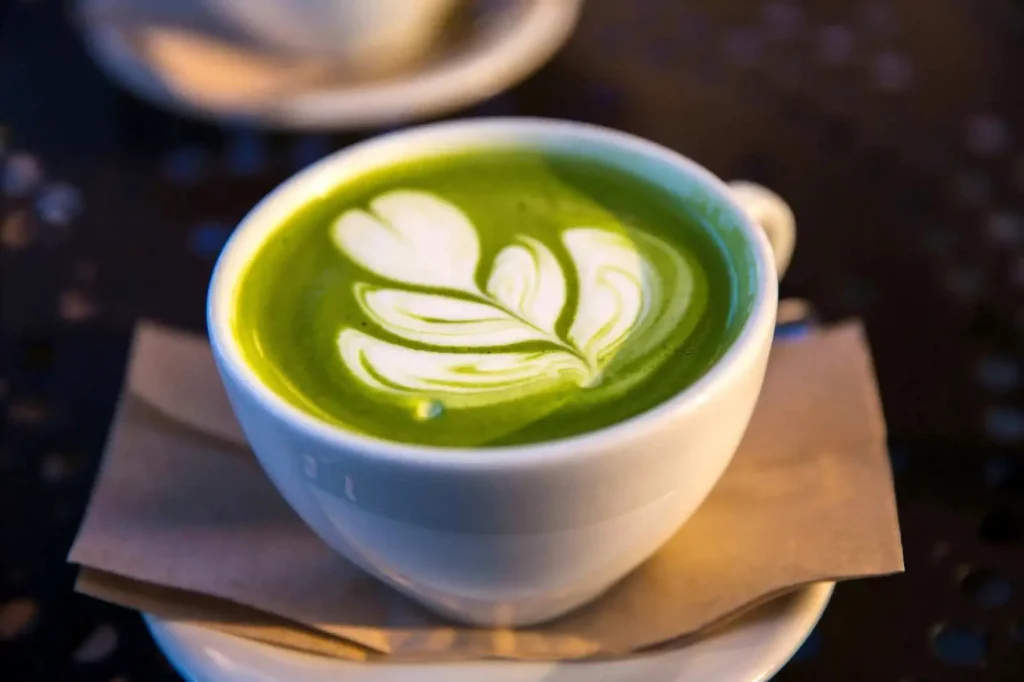
Walk into any café in New York, London, or Sydney in 2026 and you’ll see it: a vivid green drink topped with a swirl of milk, sitting next to someone’s laptop. Maybe it’s a latte. Maybe it’s an iced version. Either way, that green powder has gone from a niche Japanese tea ceremony staple to a global phenomenon that’s straining Japan’s supply chain to its limits.
But here’s the thing most people getting their first matcha latte don’t know: what they’re drinking is barely the surface. Real matcha is a 900-year-old craft with strict growing methods, a grading system that separates drinking tea from baking powder, and a chemical profile that behaves nothing like the green tea in your cupboard. It also has a Chinese origin story that most guides skip entirely.
This guide breaks down what matcha actually is — where it comes from (both China and Japan), how it’s made, what’s in it, and how to tell the good stuff from the filler in an era when fake matcha is flooding the market.
What’s Inside
- What Is Matcha? (The Short Answer)
- Where Does Matcha Come From? (The Real History)
- How Is Matcha Made? From Leaf to Powder
- Tea Cultivars: Why the Plant Variety Matters
- Types of Matcha: Ceremonial vs Culinary
- What Does Matcha Taste Like?
- How Much Caffeine Is in Matcha?
- Matcha Health Benefits: What the Research Says
- How to Prepare Matcha (Traditional Method)
- Matcha vs Green Tea: What’s the Difference?
- The 2024–2026 Matcha Supply Crisis
- How to Choose Quality Matcha
- Common Matcha Myths
- FAQ
What is Matcha? (The Short Answer)
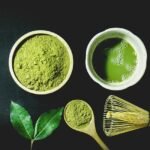
Matcha is a finely ground powder made from specially grown green tea leaves. Unlike regular green tea, where you steep the leaves and throw them away, with matcha you drink the entire leaf. That single difference explains almost everything about why matcha tastes, feels, and affects you differently than any other tea.
Three things set matcha apart:
- Shade-growing. The tea plants are covered with shade structures for 20–30 days before harvest. This forces the plant to produce more chlorophyll and L-theanine, which gives matcha its bright green color and the calm, focused energy people describe.
- Stone-grinding. Only the youngest, softest leaves are picked, steamed, dried, and then ground in granite stone mills into a powder so fine it dissolves into water. A single mill produces only about 40 grams of matcha per hour.
- Whole-leaf consumption. You’re not steeping and discarding — you’re consuming the entire tea leaf, which means you get the full dose of catechins, L-theanine, and caffeine the plant produced.
That’s the definition. Now let’s get into why it’s made this way — and where it actually came from.
Where Does Matcha Come From? (The Real History)
Most matcha guides give you a one-liner: “matcha originated in China, then went to Japan.” That’s technically true but misses the actual story, which is far more interesting.
The Chinese Invention: Song Dynasty Dian Cha (点茶)
Matcha as we know it — powdered tea whisked with hot water — was invented in China during the Song Dynasty (960–1279). The method was called dian cha (点茶, literally “to point tea”), and it was the dominant way Chinese people drank tea for over three centuries.
Here’s how it worked: tea leaves were compressed into cakes, dried, then ground into an extremely fine powder using metal or stone grinders. The powder was sifted into a bowl, a small amount of hot water was added to form a paste, and then more water was poured in while the drinker whisked vigorously with a bamboo whisk — the same chasen (茶筅) used in Japanese tea ceremonies today. The goal was to produce a thick, stable foam on top called tanghua (汤花, “soup bloom”), prized for its pure white color and longevity.
Song Dynasty tea culture went deep. Emperor Huizong himself wrote Daguan Cha Lun (大观茶论, “Treatise on Tea”), a detailed manual covering cultivation, harvesting, grinding, and whisking technique. A scholar named Cai Xiang wrote Cha Lu (茶录, “Record of Tea”), which specified that the whisking must follow a circular motion with enough force to “make the tea bloom.” There was even an advanced art form called chabaixi (茶百戏, “hundred tea plays”), where artists used only tea and water to paint intricate patterns — landscapes, calligraphy, birds — on the foam surface. It was, essentially, 12th-century latte art.
The competitions were called dou cha (斗茶, “tea battles”). Two people would whisk their tea simultaneously, and judges scored on foam color, texture, and how long it lasted before dissipating. The black-glazed Jian Zhan (建盏) bowls from Fujian Province were the preferred vessel — the dark background made the white foam pop. Three surviving yaobian (曜变) Jian Zhan bowls, considered the pinnacle of the craft, are now designated National Treasures in Japan.
How It Reached Japan
In 1191, the Zen Buddhist monk Eisai returned from a pilgrimage to China carrying tea seeds, the dian cha method, and a text he’d written called Kissa Yōjōki (喫茶養生記, “How to Stay Healthy by Drinking Tea”). He had studied at Jing Shan temple near Hangzhou, where Song Dynasty monks used powdered tea as a meditation aid. The tea kept them alert during long zazen sessions — the L-theanine providing calm focus without drowsiness.
Eisai planted the seeds in the mountains of Kyushu, and the method spread through Japanese Zen monasteries. Over the next four centuries, it evolved from a monastic practice into a formal ceremony under tea masters like Murata Jukō, Takeno Jōō, and Sen no Rikyū, who codified the principles of chanoyu (茶の湯) — the Japanese tea ceremony — as we know it today: wa-kei-sei-jaku (和敬清寂, harmony, respect, purity, tranquility).
Why China Abandoned Powdered Tea
Here’s the twist. In 1391, Ming Dynasty founder Emperor Zhu Yuanzhang issued an edict abolishing compressed tea cakes as a tribute item, citing the burden on farmers. He promoted loose-leaf tea instead — simpler to produce, simpler to prepare. Within decades, dian cha vanished from China. The bamboo whisk, the tea cakes, the foam competitions — all of it disappeared from daily Chinese life and survived only in historical texts and a few folk traditions.
Japan, isolated and culturally independent, kept the practice alive. What began as a Chinese invention became, over 800 years, a distinctly Japanese art form. Today, the dian cha tradition is being revived in China as intangible cultural heritage — particularly in Jiangsu and Fujian provinces — but the living, unbroken tradition lives in Japan.
The takeaway: Matcha is not exclusively Japanese or Chinese. It’s a Chinese method that Japan preserved, refined, and elevated into a cultural institution. Both histories matter.
Where Matcha Comes From Today
Today, authentic matcha comes almost exclusively from Japan. The three main growing regions are:
- Uji (宇治), near Kyoto — the historical heartland, known for the highest-grade ceremonial matcha
- Yame (八女), in Fukuoka — produces deeply shaded, sweet matcha, often award-winning
- Nishio (西尾), in Aichi — the largest production region by volume, strong for culinary grades
Buyer beware: If a package says “matcha” but doesn’t specify shade-growing or stone-grinding, treat it with caution. True matcha must be shade-grown for 20–30 days and stone-ground from tencha leaves. Many cheap powders from China, Vietnam, and even Japan skip this process, selling ordinary green tea powder under the matcha name.
How is Matcha Made? From Leaf to Powder
The process that turns a tea leaf into matcha takes about six weeks from shading to grinding. Here’s the sequence:
1. Shading (20–30 days before harvest)
Tea fields are covered with bamboo frames and black nylon or straw screens. Light reaching the plants drops by 60–90%. The plant compensates by producing more chlorophyll (for the green color) and more L-theanine (for the umami sweetness and calming effect). Catechins, which cause astringency, drop. This is why good matcha is sweet, not bitter — a transformation confirmed by research on shading’s biochemical effects published in the International Journal of Molecular Sciences.
2. Harvesting
Only the youngest top leaves are picked, usually by hand for ceremonial grade, by machine for culinary. The spring harvest (first flush, or ichibancha 一番茶) in late April to early May produces the highest-quality matcha of the year.
3. Steaming
Within hours of picking, the leaves are steamed for 15–20 seconds. This stops oxidation and locks in the green color. This step is what separates Japanese green tea (steamed) from Chinese green tea (pan-fired).
4. Drying and Sorting
The steamed leaves are dried in specialized machines. At this stage the leaves are called aracha (荒茶, rough tea). Stems, veins, and older leaves are removed, leaving only the pure leaf meat, now called tencha (碾茶).
5. Stone-Grinding
The tencha is ground in granite stone mills at a controlled, slow speed. Fast grinding creates heat, which destroys the aroma. A traditional mill produces only about 40 grams per hour — that’s why high-quality matcha is expensive. The finished powder is now officially matcha.
Tea Cultivars: Why the Plant Variety Matters
Here’s something almost no matcha guide talks about: the tea plant isn’t a single variety. Just as wine grapes come in Pinot Noir, Cabernet, and Merlot, the tea plant Camellia sinensis has dozens of cultivated varieties, called cultivars. The cultivar determines the matcha’s color, umami depth, sweetness, bitterness, and aroma — sometimes more than the growing region or processing method.
Because matcha is consumed as whole powder rather than an infusion, subtle chemical differences between cultivars become magnified in the cup. Here are the ones that matter:
| Cultivar | Character | Umami | Sweetness | Best For |
|---|---|---|---|---|
| Asahi (あさひ) | Buttery, deep umami. Competition winner — nearly every top-3 finish at Japan’s national tea competition is Asahi. | Thick koicha, highest ceremonial | ||
| Samidori (さみどり) | Creamy, nutty, refined. Uji native, the traditional choice for tea ceremony schools. | Traditional usucha, ceremonial | ||
| Gokou (ごこう) | Velvety texture with chocolate notes and intense aroma. Uji-bred, prized for fragrance. | Connoisseur usucha | ||
| Okumidori (おくみどり) | Deep green color, mellow and well-rounded. Late harvest, frost-resistant. | Premium blends, latte base | ||
| Ujihikari (宇治ひかり) | Clean, marine, elegant. Rare Uji-native cultivar. | High-end ceremonial | ||
| Saemidori (さえみどり) | Sweet, low bitterness, vibrant green. Cross of Yabukita × Asahi. | Sweet lattes, approachable matcha | ||
| Yabukita (やぶきた) | The workhorse — 70% of all Japanese tea. Fresh, lightly grassy, balanced. Rarely used alone for ceremonial. | Everyday drinking, blends, lattes |
Why this matters for buyers: Most matcha on the market is a blend — tea masters combine 2–4 cultivars to achieve consistency year after year, since weather and soil shift the flavor profile each harvest. Single-cultivar matcha exists but is produced in small batches, costs significantly more, and is sought after by serious drinkers who want to taste the unblended character of one variety.
If you see a brand listing the cultivar on the package (Asahi, Samidori, Gokou), that’s a sign of transparency and quality. Most cheap matcha won’t tell you — because it’s usually Yabukita or a generic blend that wouldn’t impress anyone who knows the difference.
For a deeper comparison of how grades work and what to look for, see our complete matcha grades buyer’s guide.
Types of Matcha: Ceremonial vs Culinary
This is the single most common point of confusion for new buyers. Matcha is graded by quality, and the grade determines what you should use it for.
Ceremonial Grade
- Made from the first harvest (first flush)
- Youngest, softest leaves, no stems
- Vibrant jade green color
- Naturally sweet, umami-rich, low astringency
- Best consumed pure, whisked with water only
- Price: $25–$50+ per 30g
Culinary Grade
- Made from later harvests (second, third flush) or older leaves
- Slightly more astringent, bolder flavor
- Designed to hold up against milk, sugar, and other ingredients
- Sub-grades: premium culinary, cafe grade, ingredient grade, kitchen grade
- Price: $10–$25 per 100g
The mistake most beginners make: buying cheap “ceremonial” matcha on Amazon for $12. If the price seems too good for ceremonial grade, it isn’t ceremonial grade. Real ceremonial matcha cannot be produced for that price. If you’re making lattes, buy culinary grade. If you’re drinking it pure, buy ceremonial from a reputable Japanese importer.
For the full breakdown of what separates real ceremonial from fake — including the L*a*b* color science and why the term “ceremonial grade” has no legal definition — read our matcha grades guide.
What Does Matcha Taste Like?
Good matcha doesn’t taste like regular green tea. The flavor profile is built on three layers:
- Umami (鲜味) — a savory, broth-like depth, almost like a light dashi. This comes from L-theanine produced during shading.
- Sweetness — a clean, vegetal sweetness, not sugary. High-grade matcha has almost no bitterness.
- Astringency (涩) — a slight dryness on the finish. Lower grades have more of this. Cheap matcha is mostly astringency and bitterness with no umami.
If your matcha tastes bitter, grassy, or like lawn clippings, you’re either using water that’s too hot (above 80°C / 176°F) or you bought low-quality powder. Both are fixable — see our step-by-step preparation guide for the fix.
How Much Caffeine is in Matcha?
A standard serving of matcha is 1–2 grams (about half to one teaspoon) whisked into 60–80ml of water. That serving contains roughly 30–70mg of caffeine.
For comparison:
| Drink | Caffeine (per serving) |
|---|---|
| Matcha (1 tsp, 2g) | 30–70 mg |
| Espresso (1 shot) | 60–80 mg |
| Drip coffee (8oz) | 95–200 mg |
| Black tea (8oz) | 40–70 mg |
| Regular green tea (8oz) | 25–50 mg |
The numbers tell half the story. The other half is how the caffeine hits you. Coffee delivers a sharp spike that peaks in 30–45 minutes and crashes. Matcha’s caffeine binds to L-theanine, which slows absorption. The result is what regular drinkers describe as a “calm alertness” — energy that comes on gradually over 30 minutes and lasts 3–6 hours, without the jitters or the crash.
This is the single biggest reason people switch from coffee to matcha, and it’s not placebo. The L-theanine/caffeine interaction is one of the most studied combinations in nutritional neuroscience. A 2024 randomized controlled trial found that daily matcha intake improved subjective sleep quality and emotional stability in healthy adults, even though the caffeine content did not worsen objective sleep parameters.
Matcha Health Benefits: What the Research Actually Says
Peer-reviewed research has compiled evidence on matcha’s bioactive compounds. Here’s what the research supports, and what’s still hype.
- High in catechins, especially EGCG — a powerful antioxidant. Because you consume the whole leaf, matcha delivers a higher concentration of catechins than steeped green tea (where most compounds remain in the discarded leaves). Research on matcha’s antioxidant properties published in Foods confirmed high levels of polyphenols, flavonoids, and vitamin C, with concentrations varying by harvest timing and water temperature. The exact multiplier varies by study and brewing method — claims of “137 times more” are based on a single 2003 study using specific conditions that don’t reflect typical preparation. According to a 2020 review published in Molecules, matcha is the best condensed source of catechins among green teas, but the real-world advantage depends heavily on brewing temperature and time. For the full breakdown, see our matcha vs green tea analysis.
- L-theanine for calm focus — increases alpha brain wave activity, associated with relaxed alertness. This is the compound behind matcha’s “no jitters” reputation.
- Possible cardiovascular and metabolic benefits — small RCTs suggest regular green tea consumption may modestly improve cholesterol and blood sugar markers. Matcha likely shares these effects, though most clinical trials have used regular green tea extracts, not matcha specifically. A critical review of human and animal studies found evidence for cognitive function and cardio-metabolic improvements, but concluded that more matcha-specific RCTs are needed. For a deeper look, a comprehensive review of matcha’s bioactive compounds published in Nutrients (2025) covers the full spectrum of research.
- “Matcha detoxes your body.” Your liver and kidneys detox your body. Matcha is not a detox.
- “Matcha burns fat.” The metabolic effect of green tea catechins is real but small — roughly an extra 60–80 calories burned per day in studies. Not nothing, not a magic bullet.
- “Matcha cures cancer / anxiety / depression.” No human clinical evidence supports these claims. Animal and lab studies exist, but that’s not the same thing.
If you want the deep dive on this, we cover it separately in our matcha health benefits guide. This page is about what matcha is, not what it claims to cure.
How to Prepare Matcha (Traditional Method)
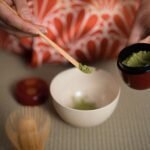
You need three tools: a chasen (茶筅, bamboo whisk), a bowl, and a fine sifter. The whisk is non-negotiable — a metal whisk or spoon won’t incorporate the powder properly.
- Sift 1–2 grams of matcha into your bowl (sifting prevents clumps).
- Heat water to 70–80°C (160–176°F). If you don’t have a temperature-control kettle, boil and let sit for 3 minutes. Never use boiling water — it scorches the powder and turns it bitter.
- Pour about 60ml (2oz) of water into the bowl.
- Whisk in a “W” or “M” motion — not circles — for 15–20 seconds until a thin foam forms on top.
- Drink immediately. Matcha separates if it sits.
Making a latte? Prepare the matcha concentrate with less water (about 30ml), then add steamed milk or a milk alternative. Oat milk pairs particularly well — the sweetness balances matcha’s earthiness. For the full step-by-step with troubleshooting, see our complete matcha preparation guide.
Matcha vs Green Tea: What’s the Difference?
This question gets asked constantly, so let’s settle it.
| Matcha | Green Tea (steeped) | |
|---|---|---|
| Form | Powder | Loose leaves or tea bags |
| Growing | Shade-grown 20–30 days | Grown in full sun |
| Consumption | You drink the whole leaf | You steep and discard leaves |
| Caffeine | 30–70 mg per serving | 25–50 mg per cup |
| L-theanine | High | Moderate |
| EGCG (antioxidant) | Higher (whole leaf consumed) | Moderate (most discarded with leaves) |
| Preparation | Whisked | Steeped |
| Price | $0.50–$1.50/serving | $0.05–$0.30/cup |
The short version: matcha is a concentrated, shade-grown, whole-leaf form of green tea. Green tea is the same plant, processed and consumed differently. They’re related, not the same product. For the full deep-dive — including why the “137x antioxidant” claim is misleading — see our matcha vs green tea analysis.
The 2024–2026 Matcha Supply Crisis
If you’ve tried to buy ceremonial matcha recently and found your usual brand out of stock, suddenly more expensive, or mysteriously different in taste — you’re not imagining it. The Global Japanese Tea Association has called this the first matcha shortage in history, and it began in autumn 2024.
What Happened
Two forces collided: supply collapsed while demand exploded.
On the supply side: Record-breaking summer heat in 2024 damaged tencha crops across Japan. A tea farmer in Uji told Reuters he usually harvests 2 tons of tencha but got only 1.5 tons in 2025. Overall, 2025 tencha production fell an estimated 20–30% year-over-year. At Kyoto’s opening tencha auction in May 2025, the average price hit ¥8,235/kg (about $56) — up 170% from the previous year and far above the 2016 record of ¥4,862/kg.
On the demand side: Global matcha consumption went viral. Japan’s 2024 green tea exports reached ¥36.4 billion (~$245 million), up 25% year-over-year, with matcha driving nearly all the growth. On TikTok, the #matcha hashtag surpassed 7 billion views. Tourists flocking to Japan (a record 37 million in 2024) bought matcha as souvenirs, prompting Tokyo tea shops to impose one-tin-per-customer purchase limits.
Why It Can’t Be Fixed Quickly
New tencha fields take approximately 5 years to reach full production. You can’t just plant more tea and expect a harvest next spring. Major producers have already raised prices: Marukyu Koyamaen increased product prices to 1.5–1.6x, citing tencha price increases of 100–150%. Nakamura Tokichi reported 170% tencha price increases. Several brands are limiting production and selling certain grades only seasonally.
What This Means for You
The shortage is specifically in ceremonial-grade tencha — shade-grown, first-harvest leaf. Culinary grade (later harvests, less shading) is less affected. But the crisis has created a secondary problem: some sellers are relabeling culinary-grade powder as “ceremonial” to capitalize on scarcity.
If a brand you’ve never heard of is selling “ceremonial grade” at suspiciously low prices in 2025–2026, be skeptical. For practical guidance on spotting genuine ceremonial matcha, see our matcha grades buyer’s guide, which includes color science benchmarks and a verification checklist.
How to Choose Quality Matcha
Four things to look for, in order of importance:
- Color. Good matcha is vibrant, electric green — almost neon. If it’s yellowish, brownish, or dull, it’s old, low-grade, or improperly stored. This is the single fastest way to judge quality before you buy.
- Origin. Look for Japan (Uji, Yame, Nishio). If origin isn’t stated, assume it’s a blend or not Japanese.
- Harvest date. Matcha degrades. Look for packaging date, not just “best by.” Ideally consumed within 6–8 weeks of opening, and within about a year of grinding. First-spring harvest (April–May) is the best.
- Price. Real ceremonial matcha costs $25–$50+ per 30g. If it’s $12 for 100g labeled “ceremonial,” it’s not ceremonial. That’s not a deal — it’s a mislabeled culinary grade.
We have a full buying guide that goes deeper into grades, the cultivar question, and what to avoid in a shortage market.
Common Matcha Myths
“All green powder is matcha.”
Fact: No. Green tea powder from China, often sold cheaply, is not shade-grown and not made from tencha. It’s a different product sold under the matcha name. China produces over 5,000 tons of matcha annually — more than Japan by volume — but the quality and processing standards are different, and much of it is not shade-grown.
“Matcha is caffeine-free.”
Fact: It’s not. A serving has about as much caffeine as a shot of espresso. The L-theanine changes how you feel it, but the caffeine is there.
“Ceremonial grade is always better.”
Fact: Only if you’re drinking it pure. If you’re making lattes, smoothies, or baking, culinary grade is actually better — it’s designed to hold up to other ingredients without disappearing.
“You can’t drink matcha every day.”
Fact: You can. Most Japanese tea drinkers consume 1–3 servings daily. The main caution is caffeine sensitivity and, for pregnant women, the caffeine and potential lead content (since you’re consuming the whole leaf). If either applies, talk to your doctor.
“Matcha has 137 times more antioxidants than green tea.”
Fact: This number comes from a single 2003 study by Weiss and Anderton that measured EGCG under specific lab conditions. The “137x” figure is real but misleading — it compares matcha to a specific steeping protocol, not to all green tea preparation methods. Under typical brewing conditions, the real-world difference is smaller and depends on water temperature, steeping time, and leaf-to-water ratio. For the full analysis, see our matcha vs green tea article.
FAQ
Is matcha the same as green tea?
No. Matcha is a powdered, shade-grown form of green tea where you consume the whole leaf. Regular green tea is steeped and the leaves are discarded. They come from the same plant but are processed and consumed differently.
How much matcha per day is safe?
For most adults, 1–3 servings (1–6 grams) per day is well within safe limits. The main consideration is caffeine intake. If you’re pregnant, nursing, or sensitive to caffeine, consult your doctor.
Does matcha have more caffeine than coffee?
Per serving, no. A cup of coffee has roughly 95–200mg of caffeine; a serving of matcha has 30–70mg. But matcha’s caffeine is released more slowly due to L-theanine, so the energy lasts longer and feels calmer.
Why is matcha so expensive?
The shading process, hand-harvesting of top leaves, and slow stone-grinding (about 40g per hour per mill) make real matcha labor-intensive. The 2024–2026 tencha shortage has pushed raw material prices up 70–170% depending on grade. Cheap “matcha” is usually later harvests, machine-processed, or not actually shade-grown.
Is matcha Chinese or Japanese?
Both. The powdered-tea whisking method was invented in China during the Song Dynasty (960–1279) as dian cha (点茶). A Zen monk brought it to Japan in 1191, where it evolved into the tea ceremony. China abandoned powdered tea in the Ming Dynasty (after 1391) and switched to loose-leaf. Japan preserved and refined the practice for 800 years. Today, the living tradition is Japanese, but the origin is Chinese.
Can I use culinary matcha for drinking?
You can, but it will be more astringent and less sweet than ceremonial. If you’re new to matcha and want to try it pure, start with ceremonial. If you only plan to make lattes, culinary is the right choice.
Does matcha expire?
Unopened, matcha lasts about 12–18 months if refrigerated. Once opened, use it within 4–8 weeks for best flavor, as oxidation degrades both taste and nutrients.
The Bottom Line
Matcha in 30 Seconds
- Shade-grown, stone-ground green tea powder — born in Song Dynasty China, perfected in Japanese tea ceremony
- Consumed whole — you drink the entire leaf, not just an infusion
- Higher in caffeine, L-theanine, and catechins than regular green tea
- Produces a calmer, longer-lasting energy than coffee
- Origin: Uji, Yame, or Nishio, Japan
- Grade: Ceremonial for drinking, culinary for lattes and baking
- Cultivar: Asahi and Samidori for ceremonial; Yabukita for everyday
- Color: Vibrant electric green, never dull or yellowish
- Price: Real ceremonial costs $25–$50+ per 30g
- Cheap “ceremonial” matcha under $15 — it’s mislabeled culinary
- Green powder with no origin, no cultivar, no shade-growing info
- Boiling water (use 70–80°C / 160–176°F)
- Anything that claims matcha “detoxes” or “cures” — that’s marketing, not science
- In 2025–2026: be extra cautious — shortage has brought out fake “ceremonial” sellers