
Matcha and green tea are everywhere — in lattes, in supplements, in skincare, in dessert. They’re often talked about as if they’re completely different things. They’re not. They’re the same plant, processed differently, consumed differently, and delivering different amounts of the same compounds.
If you’re trying to figure out which one deserves space in your kitchen, this guide breaks down the real differences — not the marketing version. We’ll cover how they’re made, what’s actually in them, and which one makes more sense for your goals.
New to matcha? Start with our complete guide to what matcha is. Looking for the health angle? See our science-backed breakdown of matcha health benefits. This article focuses specifically on the head-to-head comparison.
The Short Answer
Matcha and green tea come from the same plant (Camellia sinensis). The difference is how they’re grown, processed, and consumed:
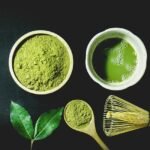
- Matcha = shade-grown, stone-ground into powder, you consume the entire leaf
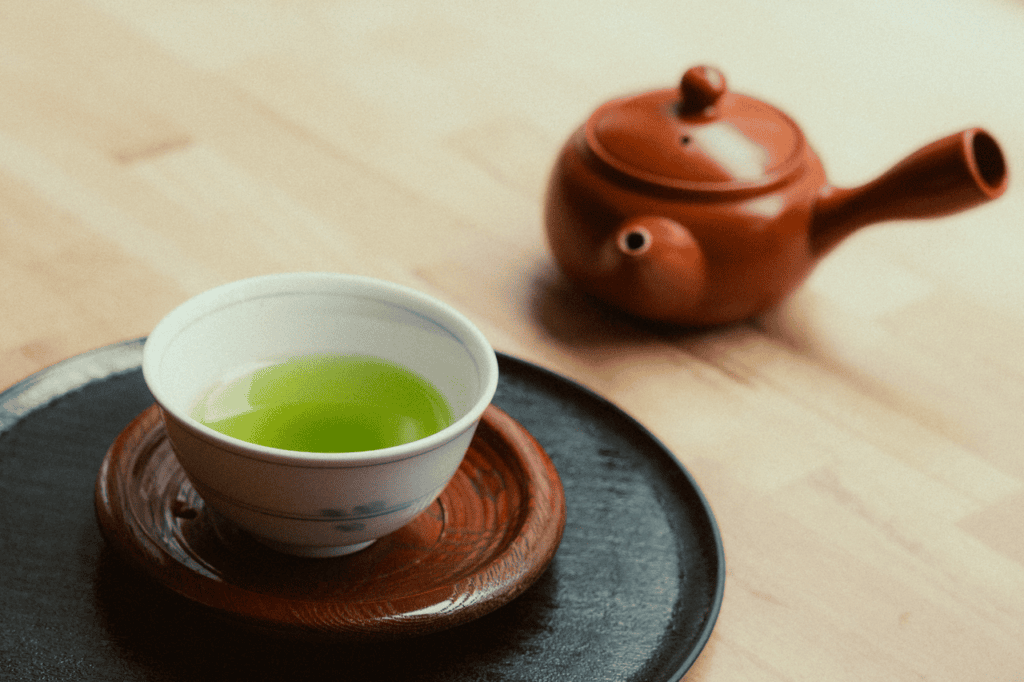
- Green tea = sun-grown, steeped in hot water, you discard the leaves
Because you eat the whole leaf with matcha, you get more of everything — more caffeine, more L-theanine, more catechins per serving. But here’s the twist: per gram of dry leaf, the difference is much smaller than most articles claim. The real advantage isn’t that matcha’s leaves are magical. It’s that you’re consuming 100% of them instead of throwing most away.
What’s in This Guide
- Same Plant, Different Process
- How Matcha Is Made
- How Regular Green Tea Is Made
- The Critical Difference: Whole Leaf vs Steeped
- Nutritional Comparison
- The “137 Times” Myth
- Caffeine Comparison
- L-Theanine: Matcha’s Secret Weapon
- Antioxidants: The Surprising Truth
- Taste and Flavor
- Cost Comparison
- Safety: Heavy Metals and Fluoride
- Which Should You Choose?
- FAQ
Same Plant, Different Process
Here’s the thing that confuses a lot of people: matcha is green tea. Both come from Camellia sinensis, the tea plant. Sencha, gyokuro, matcha, dragonwell, gunpowder — they’re all the same species. What makes them different is how the leaves are grown, harvested, and processed after picking.
Think of it like potatoes. A Russet and a Yukon Gold are both potatoes. But one makes better fries and the other makes better mash. The processing and preparation determine the final product, not the plant itself.
The same logic applies here. The journey from tea plant to your cup is what creates the matcha-vs-green-tea distinction.
How Matcha Is Made
Matcha production is labor-intensive and highly specific. Here’s the process in brief (our matcha basics guide covers this in more detail):
- Shade-growing (20–30 days before harvest): Tea plants are covered with bamboo screens or synthetic canopies. This blocks sunlight and forces the plant to produce more chlorophyll (for the vivid green color) and more L-theanine (for the sweet, umami flavor).
- Selective harvesting: Only the youngest, topmost leaves are picked. These are the most tender and nutrient-dense.
- Steaming: Leaves are steamed immediately after picking to halt oxidation. This preserves the green color and catechin content. (This is also what makes it “green” tea rather than black or oolong.)
- Drying and destemming: The steamed leaves are dried and de-stemmed. The resulting flat, flake-like material is called tencha.
- Stone-grinding: Tencha is slowly ground in stone mills into an ultra-fine powder. This is matcha. The grinding process is deliberately slow to avoid heat buildup that would degrade nutrients.
The result is a fine, bright green powder where you consume the entire leaf.
How Regular Green Tea Is Made
Regular green tea (sencha is the most common type in Japan; Chinese varieties include dragonwell and gunpowder) follows a simpler path:
- Sun-grown: The tea plants grow in full sunlight. No shading period. This produces higher catechin content (catechins are the plant’s sunblock — more sun means more catechins) but lower L-theanine.
- Harvesting: Leaves are harvested by machine or hand, often including older leaves lower on the plant.
- Steaming or pan-firing: Japanese green teas are steamed (like matcha). Chinese green teas are typically pan-fired in woks to halt oxidation.
- Rolling and drying: Leaves are rolled into needles, pellets (gunpowder), or flat shapes, then dried.
The result is loose-leaf tea or tea bags that you steep in hot water, then strain and discard.
The Critical Difference: Whole Leaf vs Steeped
This is the single most important distinction, and most comparison articles gloss over it.
When you steep green tea, hot water extracts the water-soluble compounds from the leaf. But not everything in a tea leaf is water-soluble. According to research on tea chemistry, a typical brew extracts only about 30–42% of the dry weight solids from tea leaves. The rest — including a significant portion of catechins, fiber, and other compounds — stays in the leaves, which you throw away.
A review published in Pharmacological Research (ScienceDirect) notes that catechins typically account for 30–42% of the dry weight of brewed green tea solids — but that’s only what makes it into the water. A meaningful fraction of catechins remains trapped in the discarded leaves.
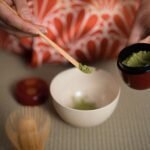
With matcha, there’s no straining. You whisk the powder into water and drink the whole thing. You consume 100% of the leaf. Every catechin, every amino acid, every trace of caffeine, and — importantly — every bit of fiber.
A 2024 study in Foods (MDPI) analyzing matcha’s nutritional composition found that matcha powder contains 56.1g fiber / 100g — something you get zero of from steeped tea. It also contains 17.3g of protein per 100g and notable amounts of omega-3 fatty acids, none of which transfer into a cup of steeped green tea.
This is matcha’s real advantage. Not that its leaves are nutritionally superior per gram — they’re not dramatically different — but that you actually consume the entire leaf instead of throwing most of it away.
Nutritional Comparison
Here’s where the data gets interesting. A 2025 review published in Nutrients (MDPI) compiled nutritional data comparing matcha to sencha (the most common Japanese green tea) per serving:
| Compound | Matcha (2g powder) | Sencha (235ml brewed) |
|---|---|---|
| Total catechins | 170 mg | 51–160 mg |
| EGCG (key antioxidant) | 109.8 mg | 10–80 mg |
| L-theanine | 50.3 mg | Trace (not consistently reported) |
| Caffeine | 72.5 mg | 28.2–37.6 mg |
| Dietary fiber | ~1.1 g | 0 g |
| Protein | ~0.35 g | 0 g |
On paper, matcha delivers more of every bioactive compound per serving. But read the sencha ranges carefully: a high-quality sencha brewed properly can deliver up to 160mg of total catechins — nearly matching matcha. The overlap is real.
The compounds where matcha has a clear, consistent advantage are L-theanine (thanks to the shade-growing process) and caffeine (because you consume the whole leaf rather than extracting only part of it).
The “137 Times” Myth
You’ve seen the claim: “Matcha has 137× more antioxidants than green tea.” It’s on hundreds of blogs, product pages, and Instagram posts. Here’s where it comes from and why it’s misleading.
The number originates from a 2003 study by Weiss and Anderton published in the Journal of Chromatography A. The researchers compared catechin levels in matcha to a single commercial green tea called “China Green Tips” (a Starbucks bagged tea). They found that matcha’s EGCG concentration was 137 times higher than that specific sample.
The problem: this was one matcha sample versus one low-quality bagged green tea. It’s not a representative comparison. The study itself offered a more conservative conclusion that gets ignored in marketing: matcha contained “at least three times higher” EGCG than the largest literature value for other green teas.
A more comprehensive 2023 study by Meyer et al., published in Plant Foods for Human Nutrition, tested 15 commercial teas across multiple categories. They found that ceremonial matcha contained 56.57 mg/g of EGCG, culinary matcha 50.53 mg/g, and bagged green tea ranged from 23.29 to 70.22 mg/g. Per gram of dry leaf, the difference between matcha and quality green tea is roughly 1.2–2.4× — not 137 times.
The “137 times” figure is technically real but practically meaningless. It compares matcha to one of the lowest-quality green teas available. Use the 3× figure if you want a defensible claim.
Caffeine Comparison
Matcha contains roughly twice the caffeine of steeped green tea per serving — about 70mg versus 30–35mg. But both are significantly lower than coffee (95–120mg per cup).
| Beverage | Caffeine per serving | Energy profile |
|---|---|---|
| Matcha (2g powder) | ~70mg | Gradual onset, 3–4hr duration, calm |
| Green tea (steeped) | ~30–35mg | Mild, short duration, gentle |
| Coffee | ~95–120mg | Rapid onset, 1–2hr, jittery for some |
If you’re caffeine-sensitive, green tea is the safer choice. If you want a focused energy boost without coffee jitters, matcha’s combination of caffeine plus L-theanine is the sweet spot. We cover the caffeine + L-theanine interaction in detail in our matcha health benefits guide.
L-Theanine: Matcha’s Secret Weapon
If there’s one compound where matcha clearly outperforms regular green tea, it’s L-theanine. This amino acid is responsible for matcha’s signature “calm alertness” — the focused energy that doesn’t come with anxiety or a crash.
L-theanine is produced in tea plant roots and transported to the leaves. Sunlight converts it into catechins (which is why sun-grown green tea has more catechins but less L-theanine). The shade-growing process used for matcha blocks this conversion, preserving high L-theanine levels in the leaves.
The nutritional comparison data shows matcha delivering approximately ~50mg L-theanine per serving. Regular green tea contains some L-theanine, but in much smaller amounts — typically too low to be consistently reported in nutritional analyses.
This is why matcha drinkers describe a qualitatively different energy from green tea. It’s not just “more caffeine.” It’s caffeine modulated by a meaningful dose of L-theanine, which increases alpha brain wave activity and promotes relaxation without drowsiness. You can read more about the research behind this in our health benefits article.
Antioxidants: The Surprising Truth
Here’s where the matcha marketing machine gets it wrong. You’ve been told matcha has dramatically more antioxidants than green tea. The actual research paints a more nuanced picture.
The Meyer et al. 2023 study mentioned earlier tested total phenolic content and antioxidant capacity (using ORAC and CUPRAC assays) across 15 teas. The results were surprising:
Key finding: Gunpowder and bagged green teas generally exhibited higher total phenolic contents and greater antioxidant capacities than matcha teas. Among matcha samples, less expensive culinary-grade teas had greater antioxidant capacity than ceremonial-grade products.
This makes sense when you understand the mechanism: sunlight drives catechin production in tea leaves. Matcha is shade-grown, which boosts L-theanine and chlorophyll but reduces catechin synthesis. Green tea grown in full sun naturally accumulates more catechins per gram of leaf.
So why is matcha still considered an antioxidant powerhouse? Because of the whole-leaf consumption factor. Even if green tea leaves have more catechins per gram, you only extract a fraction of them through steeping. With matcha, you get 100% of the catechins present — even if the per-gram concentration is lower than sun-grown tea.
The net effect: matcha typically delivers more catechins per serving than steeped green tea, but the gap is 2–3× at most, not the 10× or 137× claimed in marketing copy.
Taste and Flavor Profile
Matcha and green tea taste fundamentally different, and this matters because if you don’t enjoy drinking it, the nutritional profile is irrelevant.
🍵 Matcha
Thick, creamy, vegetal, and umami-rich. High-quality ceremonial matcha has a natural sweetness with no bitterness. Culinary-grade matcha is more astringent and bitter. The flavor is intense and concentrated — you’re drinking a suspension of powdered leaf, not an infusion. The mouthfeel is distinctively full-bodied.
🍵 Green Tea (Sencha)
Lighter, cleaner, more refreshing. Depending on the variety, it can range from grassy and vegetal (Japanese sencha) to nutty and toasty (Chinese dragonwell). The flavor is extracted gradually through steeping, producing a thinner, more delicate cup. Bitterness appears if over-steeped or brewed with water that’s too hot.
Which tastes better? Subjective. If you like bold, savory flavors and a creamy texture, matcha wins. If you prefer light, refreshing beverages you can sip throughout the day, green tea is the better choice. Many people enjoy both for different occasions.
Cost Comparison
This is where green tea has a massive advantage, and it’s worth being honest about it.
| Product | Typical Cost | Cost per serving |
|---|---|---|
| Ceremonial matcha (premium, 30g tin) | $25–$40 | $0.80–$1.30 |
| Culinary matcha (100g bag) | $15–$25 | $0.30–$0.50 |
| Quality loose-leaf sencha (100g) | $8–$15 | $0.08–$0.15 |
| Green tea bags (100 count) | $5–$10 | $0.05–$0.10 |
The Meyer 2023 study noted this cost disparity directly: the green tea products in their study averaged $0.04–$0.08 per gram, while matcha products averaged $0.68/g — roughly 8 to 17 times more expensive.
Here’s the uncomfortable truth: if your primary goal is maximizing catechin intake per dollar, cheap green tea is dramatically more cost-effective than matcha. The study found that some of the lowest-cost green teas had the highest antioxidant capacities. Matcha’s premium price buys you the L-theanine content, the whole-leaf consumption, the ritual, and the flavor — not necessarily more antioxidants.
Safety: Heavy Metals and Fluoride
This is a topic most comparison articles skip entirely. It matters more than you’d think because the consumption method changes the safety equation.
Heavy Metals
Tea plants absorb heavy metals (lead, cadmium, arsenic) from soil. With steeped green tea, only about 10–15% of lead leaches into the water — the rest stays in the leaves you discard. With matcha, you consume the entire leaf, so you ingest whatever’s in it.
The good news: ConsumerLab.com testing found that matcha powders from reputable Japanese sources were virtually free of heavy metal contamination and pesticides. Japan’s strict agricultural regulations and the geographic isolation of growing regions (Uji, Yame, Shizuoka) from industrial zones contribute to this safety profile.
The caveat: cheap matcha from unverified sources — particularly some Chinese-origin products sold in bulk — can carry higher contamination risk. Because you consume the whole leaf, sourcing matters more with matcha than with any other tea. If the price seems too good to be true, it probably is.
Fluoride
Tea plants accumulate fluoride from soil, and older leaves contain more. A study published in Nutrients (Jakubczyk et al., 2022) found that matcha powder contains 118–121 mg F/kg. A liter of prepared matcha delivers approximately 3.4–4.0 mg of fluoride — which is essentially the entire recommended daily intake for an adult.
At 1–2 cups per day, this isn’t a concern. But if you’re drinking matcha throughout the day, using it in smoothies and baked goods, and also getting fluoride from tap water and toothpaste, you could accumulate enough to cause fluorosis (affecting teeth and bones) over time. Steeped green tea has lower fluoride per cup because you’re not consuming the leaves.
⚠️ Practical guidance: Stick to 1–3 servings of matcha per day. Buy from Japanese sources that publish third-party lab testing. If you drink a lot of tea daily (5+ cups), rotate between matcha and steeped green tea to limit fluoride exposure.
Which Should You Choose?
There’s no universal winner. The right choice depends on what you’re optimizing for:
| Your goal | Better choice | Why |
|---|---|---|
| Focused work / deep concentration | Matcha | Higher caffeine + L-theanine = calm alertness |
| Maximum antioxidants per dollar | Green tea | Far cheaper, comparable catechin content per gram |
| Daily hydration (5+ cups/day) | Green tea | Lower caffeine and fluoride load at high volume |
| Ritual and mindfulness | Matcha | Preparation process is meditative and intentional |
| Caffeine sensitivity | Green tea | Half the caffeine of matcha per cup |
| Baking, lattes, smoothies | Matcha (culinary grade) | Powder integrates into recipes; steeped tea doesn’t |
| Budget-conscious | Green tea | 10–15× cheaper per serving |
| Maximum L-theanine | Matcha | Shade-growing preserves L-theanine; sun-grown tea doesn’t |
Many people benefit from keeping both on hand: matcha for mornings when you need focused energy, green tea for afternoon sipping when you want something light and hydrating.
The Bottom Line
Summary: Matcha vs Green Tea
- Whole-leaf consumption — you get 100% of the leaf’s compounds, not just what steeps into water
- Significantly more L-theanine per serving (the calm-focus compound)
- Higher caffeine per serving than green tea (but less than coffee)
- Dietary fiber, protein, and omega-3s you can’t get from steeped tea
- A mindful preparation ritual
- Dramatically higher antioxidants than quality green tea (the 137× claim is a myth)
- Magically different leaves — it’s the same plant
- Better value — it’s 8–17× more expensive per gram
- Comparable catechin content per gram (sometimes higher)
- Lower cost and lower caffeine
- Lighter, more hydrating beverage for all-day drinking
- Lower fluoride and heavy metal exposure at high consumption volumes
Both matcha and green tea are genuinely healthy beverages backed by decades of research. Neither is a superfood. Neither will transform your health overnight. The best choice is the one you’ll actually drink consistently — because consistency matters far more than the specific compounds in any single cup.
Frequently Asked Questions
Is matcha healthier than green tea?
Not necessarily. Per gram of leaf, green tea can have comparable or even higher catechin content. Matcha’s advantage is that you consume the whole leaf, delivering more total compounds per serving. But “healthier” depends on your goals — for caffeine-sensitive people, green tea is the better choice.
Does matcha have 137 times more antioxidants than green tea?
No. That number comes from a 2003 study comparing matcha to one specific low-quality bagged green tea. Comprehensive 2023 research shows the real difference is 1.2–3× per gram of leaf. The “137×” figure is misleading marketing.
Can I substitute green tea for matcha in recipes?
Not directly. Matcha is a powder that integrates into lattes, smoothies, and baked goods. Steeped green tea is a liquid. You can use green tea as a liquid ingredient, but you won’t get the same concentrated flavor or nutrient density.
Does matcha have more caffeine than green tea?
Yes — roughly twice as much per serving. Matcha delivers about 70mg of caffeine per cup, while steeped green tea contains 30–35mg. Both are significantly lower than coffee (95–120mg).
Why is matcha so much more expensive than green tea?
The shade-growing process, hand-harvesting of young leaves, and slow stone-grinding are labor-intensive. Matcha also has a shorter shelf life than dried loose-leaf tea. You’re paying for the production method, not necessarily superior nutrition.
Is it safe to drink matcha every day?
Yes, for most healthy adults. 1–3 servings per day is well within safe limits for caffeine and catechin intake. Be mindful of fluoride accumulation if you consume large amounts daily. Pregnant women should limit caffeine intake per their healthcare provider’s guidance.
Which has more L-theanine, matcha or green tea?
Matcha has significantly more L-theanine per serving due to the shade-growing process, which preserves this amino acid. Green tea grown in full sun converts L-theanine into catechins, leaving less in the final cup.
Can I get the same benefits from green tea extract supplements?
Supplements deliver concentrated catechins but lack the L-theanine, fiber, and ritual of drinking matcha. High-dose EGCG supplements (800mg+) have been linked to liver toxicity in rare cases. Drinking matcha or green tea is safer than taking extract pills.