
You bought the matcha. You opened the bag. Now you’re staring at a bowl of green powder wondering why your first attempt tastes like grass clippings dissolved in hot water.
Here’s what nobody tells you: making matcha is not the same as making tea. You don’t steep and throw away a bag. You’re suspending a fine powder in water using a specific motion, at a specific temperature, with a specific tool. Get any of those wrong and the result is bitter, clumpy, and disappointing.
This guide walks through the traditional Japanese method step by step — the one used in tea ceremonies for 400 years — plus how to adapt it if you don’t own a bamboo whisk, how to turn it into a latte, and the five mistakes that ruin most first attempts. We also go where most guides don’t: actual experiments with water temperature, dosage ratios, and water hardness, so you can understand why each variable matters, not just that it does.
If you’re completely new to matcha, start with our complete guide to what matcha is. This article assumes you know the basics and want to actually make a cup.
What’s in This Guide
- What You Need to Make Matcha
- Traditional Method (Step-by-Step)
- Temperature Experiment: What Actually Changes
- Dosage Guide: Finding Your Ratio
- How to Make Matcha Without a Whisk
- How to Make a Matcha Latte
- How to Make Iced Matcha
- Water Quality: The Hidden Variable
- 5 Common Mistakes (and How to Fix Them)
- Tips for Better Matcha
- Matcha Caffeine: What to Expect
- FAQ
What You Need to Make Matcha
Three tools are essential. One is non-negotiable.
The Essential Tools
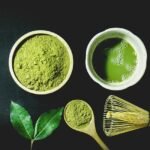
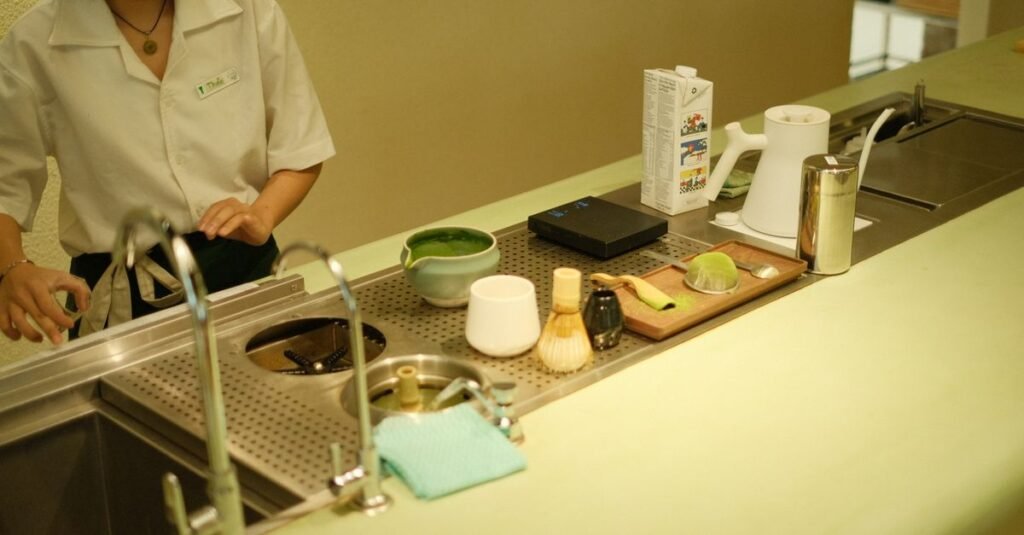
- Chasen (茶筅, bamboo whisk) — Non-negotiable. This is the single most important tool for making matcha. A metal whisk, spoon, or fork will not work. The chasen has 80–120 fine bamboo prongs that suspend the powder in water through a specific motion. Without it, you get clumps.
- Chawan (茶碗, tea bowl) — A wide, shallow bowl. The width gives the whisk room to move. A coffee mug is too narrow; the whisk will hit the sides and you’ll get uneven mixing. Any wide bowl works — a traditional chawan is nice but not required.
- Sifter or tea strainer — Matcha clumps. Even fresh, high-quality matcha forms small balls of powder that won’t dissolve. A fine mesh strainer breaks these up before you add water. Skip this step and your drink will have green powder floating on top.
Optional But Helpful
- Chashaku (茶杓, bamboo scoop) — A traditional curved scoop for measuring. One scoop ≈ 0.5g. A half-teaspoon measuring spoon works identically.
- Furui (ふるい, sifter) — A dedicated matcha sifter. A regular kitchen strainer works fine.
- Kama (釜, iron kettle) — Traditional, but any kettle with temperature control works.
The Ingredients
- 1–2 grams matcha (about 1/2 to 1 teaspoon). Use ceremonial grade for drinking pure. Culinary grade works for lattes.
- 60–80ml water (about 2–3 ounces). The less water, the stronger the matcha.
- Water at 70–80°C (158–176°F). This is the most common mistake beginners make. See the temperature experiment section below.
How to Make Matcha: Traditional Method (Step-by-Step)
Follow these five steps in order. Each one matters.
Step 1: Sift the Matcha
Place your sifter over the bowl. Add 1–2 grams of matcha (about 1/2 to 1 teaspoon). Gently tap or press the powder through the mesh with the back of a spoon.
Why this matters: Matcha powder is ground so fine that it naturally clumps from moisture in the air. These clumps will not dissolve no matter how hard you whisk. Sifting takes 10 seconds and is the difference between a smooth cup and a lumpy one.
Step 2: Heat the Water (to the Right Temperature)
Heat water to 70–80°C (158–176°F). If you have a temperature-control kettle, set it to 75°C (167°F) and you’re done.
If you don’t have one:
- Boil water fully (100°C / 212°F)
- Pour it into a clean cup and let it sit for 3 minutes
- Pour from that cup into your matcha bowl
The water is now roughly 75°C. This two-step method is actually traditional — the Japanese call it cooling the water through a yuzamashi (湯冷まし, cooling vessel).
Never pour boiling water onto matcha. Water above 85°C (185°F) scorches the powder, destroys the L-theanine (the compound that gives matcha its sweetness), and turns the drink bitter. If your matcha tastes bitter, this is the first thing to fix. We tested exactly what happens at each temperature in the experiment section below.
Step 3: Add Water to the Bowl
Pour about 60ml (2 ounces) of the heated water into the bowl with the sifted matcha. Use less water for a stronger, thicker drink (koicha 濃茶 style); use more for a thinner, lighter drink (usucha 薄茶 style).
Step 4: Whisk in a “W” or “M” Motion
This is the step that separates a good cup from a bad one. Hold the chasen lightly — don’t grip it like a knife. Use your wrist, not your arm.
The motion:
- Start whisking in a “W” or “M” pattern — not circles. Move the whisk back and forth rapidly across the bottom of the bowl.
- The prongs should barely touch the bottom. You’re not mashing; you’re suspending the powder in the water.
- Whisk for 15–20 seconds. You’ll see foam begin to form on the surface.
- Once foam forms, slow down. Use just the tips of the prongs to brush the surface gently. This breaks large bubbles and creates a creamy, micro-foam layer.
Why not circles? Circular motion pushes the powder to the center of the bowl and leaves the edges unmixed. The W/M motion creates turbulence that keeps the powder suspended evenly throughout the water. Think of it like whisking egg whites — you move through the liquid, not around it.
Speed matters more than pressure. A common beginner mistake is pressing the whisk hard into the bowl. The goal is speed, not force. The bamboo prongs should flex slightly with each stroke. If you hear scratching sounds, you’re pressing too hard.
Step 5: Drink Immediately
Matcha separates if it sits. The powder sinks to the bottom within 30–60 seconds. Drink it right after whisking, while the foam is still on top.
Don’t sip politely — drink it in 2–3 gulps. The foam is the best part; it carries the aroma. If you wait, you’ll get a mouthful of powder at the bottom.
Temperature Experiment: What Actually Changes
Every matcha guide tells you to use 70–80°C water. Almost none explain what actually happens if you don’t. We tested the same ceremonial matcha (2g, 60ml water) at five different temperatures to show exactly why this variable matters.
| Water Temp | Taste | Color | Foam | What’s Happening |
|---|---|---|---|---|
| 100°C (boiling) | Harsh, bitter, astringent | Dull yellowish-green | Thin, breaks immediately | Heat destroys L-theanine and volatile aromatics. Catechins (astringent compounds) extract rapidly. The drink tastes scorched. |
| 90°C (194°F) | Still bitter, slightly less harsh | Slightly dull green | Weak foam | Borderline. L-theanine begins degrading. Some sweetness lost. |
| 80°C (176°F) | Balanced — sweet with mild astringency | Vibrant green | Good foam, stable | Sweet spot upper bound. Full extraction of caffeine and catechins without destroying L-theanine. |
| 70°C (158°F) | Sweet, umami-forward, minimal bitterness | Bright green | Creamy, stable foam | Sweet spot lower bound. L-theanine fully preserved. Catechins extract more slowly, so astringency stays low. |
| 60°C (140°F) | Very mild, slightly thin | Bright green | Dense foam | Under-extraction. L-theanine and aroma compounds don’t fully release. The drink tastes “green” but lacks depth. |
The takeaway: 70–80°C isn’t arbitrary — it’s the range where you extract enough caffeine and catechins for flavor and effect, while preserving the L-theanine that gives matcha its sweetness and calming quality. Research testing matcha at different water temperatures (25°C, 70°C, 80°C, and 90°C) confirmed that antioxidant capacity increases with temperature, but the sweet spot for balanced extraction falls in the 70–80°C range. Above 85°C, the L-theanine degrades and the catechins over-extract, turning the drink bitter. Below 60°C, you don’t extract enough of anything, and the drink tastes thin. A review in Molecules similarly found that higher brewing temperatures extract more polyphenols but also more astringent compounds, making temperature control the single most important variable in matcha preparation.
If you don’t have a temperature-control kettle, use the two-cup method: boil, pour into a cup, wait 3 minutes, then pour into your matcha bowl. This drops the water to roughly 75°C — the center of the ideal range.
Dosage Guide: Finding Your Ratio
The standard recommendation is 1–2 grams of matcha in 60–80ml of water. But that’s a wide range, and the right ratio depends on what you’re trying to make. Here’s how to think about it:
| Style | Matcha | Water | Ratio | Result |
|---|---|---|---|---|
| Usucha (薄茶, thin tea) | 2g (1 tsp) | 70–80ml | 1:35–1:40 | The standard bowl. Balanced strength, drinkable in 3 sips. This is what most people mean by “a cup of matcha.” |
| Koicha (濃茶, thick tea) | 3–4g (1.5–2 tsp) | 30–40ml | 1:10 | Thick, syrupy, intense. Used in formal tea ceremony. Requires highest-grade ceremonial matcha — lower grades will be unbearably bitter at this concentration. |
| Latte concentrate | 2g (1 tsp) | 30ml | 1:15 | Intense liquid that holds up against milk. Too strong to drink alone, perfect when diluted with 150–200ml steamed milk. |
| Iced matcha | 2g (1 tsp) | 60ml cold | 1:30 | Cold water extracts less bitterness, so the same ratio tastes sweeter than hot. Pour over ice and add cold milk or water. |
Start with 2g and 70ml at 75°C. That’s the baseline. From there, adjust one variable at a time: more matcha for intensity, more water for lightness, lower temperature for sweetness. Don’t change all three at once or you won’t know which adjustment made the difference.
How to Make Matcha Without a Whisk
No chasen? You can still make drinkable matcha. The result won’t have the foam or the smooth texture, but it works.
Method 1: Milk Frother
A handheld electric milk frother (the small battery-powered kind) works surprisingly well. Add matcha and a small amount of water (about 30ml). Froth for 10–15 seconds until incorporated. Add more water or milk.
Method 2: Shake in a Jar or Bottle
Put matcha and cold water in a small jar with a tight lid. Shake vigorously for 15–20 seconds. The matcha won’t fully dissolve, but it suspends well enough for an iced drink.
Method 3: Blender
For smoothies or lattes, a blender fully incorporates the powder. Add matcha with your other ingredients and blend for 15 seconds.
The honest version: None of these methods produce the same result as a chasen. A bamboo whisk costs $10–15. If you plan to drink matcha more than once a week, buy one. It’s the single highest-leverage purchase you can make for matcha quality.
How to Make a Matcha Latte
The traditional method gives you pure matcha. A latte adds milk and sweetener. Here’s the standard café method:
- Prepare matcha concentrate: Whisk 2g matcha with 30ml (1 ounce) of water — half the water you’d use for pure matcha. You want a thick, intense concentrate.
- Heat or steam milk: 150–200ml (5–7 ounces) of your milk of choice. Oat milk pairs particularly well — the natural sweetness balances matcha’s earthiness. Steam to 60°C (140°F) if you have a steamer; otherwise heat on the stove.
- Combine: Pour the matcha concentrate into a glass. Add the milk. Stir gently.
- Sweeten (optional): 1–2 teaspoons of maple syrup, honey, or simple syrup. Maple syrup is the most common choice in cafés because it dissolves easily and adds a warm flavor.
For iced matcha latte: pour the concentrate over ice, then add cold milk. Stir.
How to Make Iced Matcha
Iced matcha is the same process, just with cold water and ice.
- Sift 2g matcha into the bowl
- Add 60ml cold water
- Whisk with chasen for 15–20 seconds (cold water takes slightly longer to foam)
- Pour over a glass of ice
- Add cold water or milk to fill
Key difference: Cold water doesn’t extract the bitterness the way hot water does. If you’ve been making hot matcha and finding it too bitter, try iced first. It’s more forgiving — the lower temperature suppresses catechin extraction, so even lower-grade matcha tastes smoother cold.
Water Quality: The Hidden Variable
You can have perfect matcha, perfect temperature, and perfect technique — and still get a bad cup if your water is wrong. Water makes up 95%+ of what’s in your bowl. Its mineral content directly affects how matcha extracts.
Soft Water (Ideal)
Low mineral content (TDS below 50mg/L). Allows clean extraction of L-theanine and caffeine without interference. Result: sweet, umami-forward, clear green. Foam forms easily and stays stable.
Hard Water (Avoid)
High calcium and magnesium (TDS above 150mg/L). Calcium binds to catechins and L-theanine, suppressing sweet and savory notes and amplifying astringency. The drink tastes flat, muted, and slightly metallic. Foam also forms poorly.
What to Use
- Best: Filtered water with low mineral content (reverse osmosis or carbon filter). Brands like Volvic or Crystal Geyser are commonly recommended by Japanese tea instructors.
- Acceptable: Soft tap water (if you live in a soft-water area like the Pacific Northwest or Scotland).
- Avoid: Hard tap water (London, Texas, most of the US Midwest), distilled water (too pure — extracts unevenly), and strongly mineralized spring water.
Quick test: If your matcha tastes noticeably better at a café than at home, and you’re using the same powder, check your water. It’s usually the culprit.
5 Common Mistakes (and How to Fix Them)
| # | Mistake | Symptom | Cause | Fix |
|---|---|---|---|---|
| 1 | Using boiling water | Bitter, astringent taste | Water above 85°C destroys L-theanine and over-extracts catechins | Cool water to 70–80°C before pouring. Use the two-cup method if you don’t have a temperature kettle. |
| 2 | Not sifting the powder | Floating clumps of green powder on top | Matcha naturally clumps from moisture; clumps won’t dissolve no matter how hard you whisk | Sift before adding water. Takes 10 seconds. |
| 3 | Whisking in circles | Uneven mixing, powder stuck to the sides of the bowl | Circular motion pushes powder to center; edges stay unmixed | Use a W or M motion across the bottom of the bowl. Speed over pressure. |
| 4 | Using too much matcha | Overpowering, muddy taste | More powder ≠ more flavor. Over-concentration amplifies bitterness. | 1–2 grams (1/2 to 1 teaspoon) is a full serving. Start at 2g and adjust down, not up. |
| 5 | Letting it sit | Powder sinks to bottom, gritty last sip | Matcha is a suspension, not a solution. Powder settles within 30–60 seconds. | Drink within 30 seconds of whisking. Matcha doesn’t keep. |
Tips for Better Matcha
- Use soft water. Hard water (high mineral content) mutes matcha’s flavor and suppresses foam. If your tap water is hard, use filtered water. See the water quality section above.
- Store matcha properly. Once opened, matcha oxidizes within 4–8 weeks. Keep it sealed in the fridge, away from light and strong odors.
- Warm the bowl first. Pour hot water into the empty bowl, swirl, dump it out. A warm bowl keeps the matcha hotter longer and improves the whisk.
- Soak the chasen before use. Soak the bamboo prongs in hot water for 30 seconds before whisking. This softens the bamboo and prevents breakage.
- Use ceremonial grade for drinking pure. Culinary grade works for lattes but is too astringent for traditional matcha. The difference stems from shading duration and harvest timing — research on how shading changes matcha’s chemistry showed that 85% shade increases theanine and caffeine while decreasing astringent catechins. Not sure which to buy? See our matcha grades guide.
- Never put matcha in the microwave. Reheating matcha degrades the L-theanine and creates uneven hot spots. Make only what you’ll drink immediately.
Matcha Caffeine: What to Expect
A standard serving of matcha (2g) contains about 30–70mg of caffeine — roughly equivalent to a shot of espresso, but with a different effect. The L-theanine in matcha binds to caffeine and slows its absorption, producing what drinkers describe as “calm alertness” rather than a coffee spike and crash. A 2024 randomized controlled trial found that regular matcha intake improved subjective sleep quality and mental well-being without disrupting objective sleep measurements — suggesting the L-theanine moderates caffeine’s effects even on sleep-sensitive individuals.
The energy comes on gradually over 20–30 minutes and lasts 3–6 hours. If you’re switching from coffee, drink matcha in the morning; the caffeine is real even if it feels gentler. According to a critical review of matcha studies, this sustained energy profile is attributed to the synergistic interaction between caffeine and L-theanine, which enhances attention without the anxiety often associated with coffee. For the full breakdown of caffeine, L-theanine, and EGCG content, see our matcha health benefits guide. A comprehensive review of matcha’s bioactive compounds published in Nutrients (2025) provides additional detail on how these compounds interact.
FAQ
Can I make matcha with cold water?
Yes. Cold water produces a milder, sweeter drink and is more forgiving if you’re new. Whisk for 20–30 seconds instead of 15. Cold water suppresses catechin extraction, so the drink is naturally less bitter.
Do I need a special bowl?
No. Any wide, shallow bowl works. The width matters more than the material. A deep mug is the wrong shape — the whisk can’t move freely.
How much matcha per day is safe?
1–3 servings (2–6 grams) per day is well within safe limits for most adults. The main consideration is caffeine. If you’re pregnant or sensitive to caffeine, consult your doctor.
Why does my matcha foam disappear quickly?
Usually because the water was too hot, the matcha is old, or the water is too hard. Fresh ceremonial matcha whisked with soft water at 75°C produces stable foam that lasts 1–2 minutes. Old or low-grade matcha foams poorly, and hard water suppresses foam formation.
Can I reuse matcha powder?
No. Matcha is a single-use powder. Once whisked, the powder is suspended in water; you can’t separate it back out.
Is a bamboo whisk really necessary?
For traditional matcha, yes. For lattes and smoothies, a milk frother or blender works. But if you want the foam and the smooth texture, a chasen is the only tool that does it.
What’s the difference between usucha and koicha?
Usucha (thin tea) uses 2g matcha in 70–80ml water — a drinkable bowl you consume in 3 sips. Koicha (thick tea) uses 3–4g in 30–40ml water — a thick, syrupy, intense preparation used in formal tea ceremony. Koicha requires the highest-grade ceremonial matcha; lower grades are unbearably bitter at that concentration.
The Bottom Line
- Sift matcha before adding water (10 seconds)
- Heat water to 70–80°C — never boiling
- Whisk in a W/M motion for 15–20 seconds
- Drink immediately, in 2–3 gulps
- Use soft water at 75°C with 2g ceremonial matcha as your baseline
- Milk frother — best substitute for chasen
- Shake in a jar — works for iced matcha
- Blender — best for lattes and smoothies
- Boiling water — destroys L-theanine, creates bitterness
- Circular whisking — causes uneven mixing
- Letting matcha sit — powder sinks within 60 seconds
- Hard water — calcium mutes flavor and suppresses foam